Your next robot is a lamp, a clock, a jar, a piggy bank.
We do not build arms and we do not build humanoids. We build the mechanism, the perception and the firmware that go inside objects that already have a place in a room — and do not need one made for them.
01
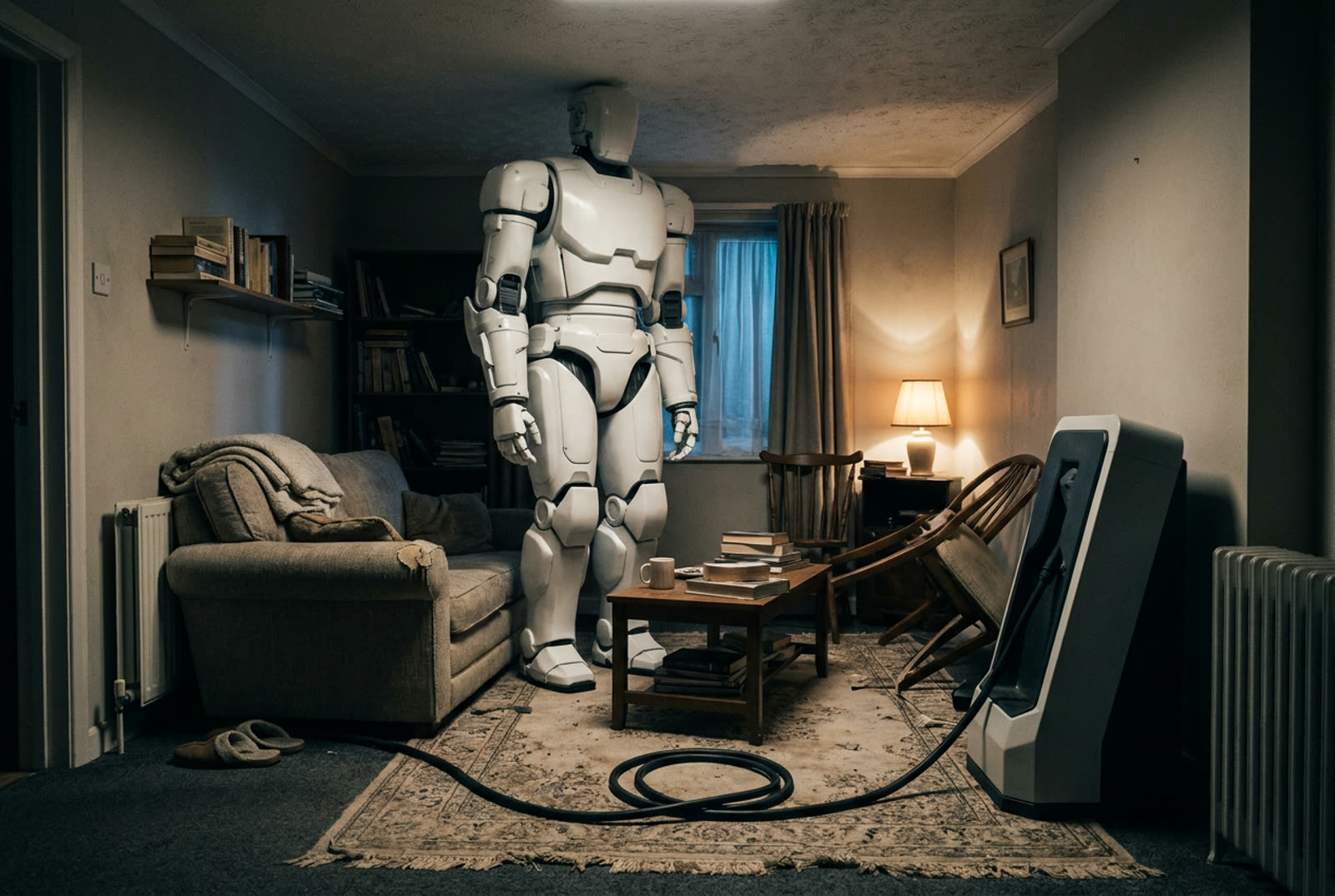
Not this
Most robots ask you to rearrange your life around them. They need floor space, a charging dock, a corner of the room and a decision about where the cable goes. They are impressive for a week.
We would rather work on what is already on the shelf. Nothing to make room for, nothing to explain to the people who live there.

02
The body comes last
The final object is not an object. What we are building, in the end, is the body an AI deserves — and it looks nothing like us.
Not a humanoid. Not an arm. A hundred ordinary things that see, decide and move, in the rooms where people already live.
We are two people. This is not a thing two people finish.
So let us build it together03
NEKO School
Everything above needs people who can build it, and embedded robotics is not taught anywhere near enough. So we wrote the course we wanted: from the sense→decide→act loop to a bill of materials that survives a production run. Free, and it stays free.
Free · Français · English · Español From the sense → decide → act loop to a bill of materials that survives a production run.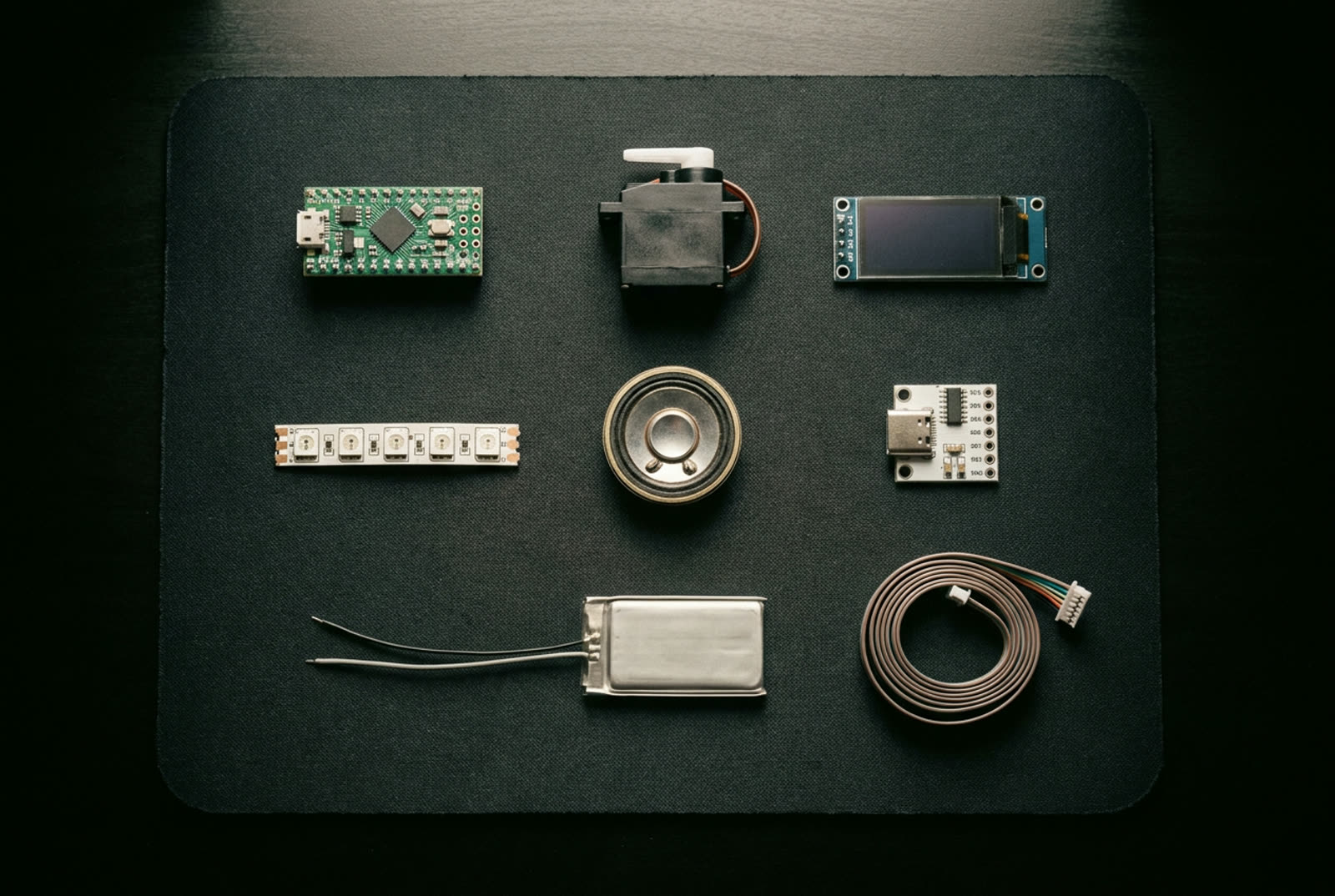
- Modules
- 8
- Lessons
- 12
- Questions
- 60
- Reading
- ~6 h
- 1Fondations2
- 2Le cerveau2
- 3Percevoir1
- 4Agir2
- 5Décider2
- 6Fabriquer1
- 7Connecter1
- 8Produire1
04
Questions
The ones we actually get asked. If yours is not here, it belongs in the community.
Is the school really free?
Yes, and it stays free. There is no paid tier waiting behind lesson four, no certificate to buy, and nothing to unlock. Embedded robotics is taught nowhere near enough, and we would rather have more people able to build these objects than a small course business.
What language is it in?
The interface is in French, English and Spanish. The twelve lessons themselves are written in French for now — an English and a Spanish version are being written. Until a lesson is translated the school shows it in French and says so on the page, rather than showing you an empty screen.
Do I need hardware to follow it?
Not to read it. The twelve lessons are about six hours of reading and they hold together on their own.
But every lesson ends with a hands-on step — the thing you have to do with real parts for the idea to land. You can skip those. You will have read a course instead of learned a craft.
Do I need an account?
No. The school opens and you read. Your progress is kept on the device you are using.
Signing in is one email link, no password, and it exists for one reason: so your progress follows you to another machine. What you did before signing in comes with you.
What do I get when I finish the twelve?
A credential minted to your wallet — proof you went through every lesson and passed every quiz. On-chain, yours, and not revocable by us.
It has no market value. We will not create one, we will not list it, and anyone offering to buy yours is not doing you a favour. What it can be is a filter: when there is an airdrop, or early access to a brief, holding it is a plausible way in. Nothing is promised.
It is not live yet. The chain is not chosen, and we would rather name it once than change it twice.
Are you building a humanoid?
No. A humanoid asks a room to make space for it, and it is impressive for about a week.
We build the mechanism, the perception and the firmware that go inside things that already have a place — a lamp, a clock, a jar. The body we are after is made of a hundred ordinary objects, not one machine shaped like a person.
I have an object idea. What do I do with it?
Bring it. The objects that come after OINK are meant to come from outside the studio — a mechanism, a shell, a behaviour, or a whole design.
Twenty percent of the token supply is locked to pay for exactly that. The terms are on the token page, and the conversation happens in the community.
What do you keep about me?
From the objects: nothing. Perception runs on the object itself. It reacts to what happens in the room, then forgets. Nothing is recorded, nothing is uploaded, and no model is trained on footage of your kitchen.
From the school: your email if you sign in, and which lessons you have finished. That is the whole list.